

Overview
Lithica Explorer is an Android-first, offline-first mobile application designed for geological fieldwork. It brings together cartographic visualization, offline area preparation, georeferenced observations, photo capture, technical document consultation, and preliminary rock classification in a single operational environment.
The app is now officially available on the Google Play Store, with full local persistence, evidence traceability, and a scientific workflow prepared for remote field campaigns without connectivity.
The app combines the field GIS capabilities typically found in QField or ArcGIS Field Maps with structured petrographic classification workflows, creating a geology-focused field platform that prioritizes scientific rigor and offline reliability.
Feedback from real geological fieldwork, offline workflows, file handling, observations, and classification use cases is always welcome and helps improve the tool.
Privacy Policy
View Lithica Explorer privacy policy
Request Lithica Explorer account deletion
Location and GPS Tracks
Lithica Explorer can record GPS tracks during fieldwork. Recording is started and stopped by the user, may continue while the application is minimized or the screen is off, and displays a persistent notification. Tracks are stored locally and are transferred only to the user’s own Google Drive account when the user enables synchronization.
Use During Early Development
Lithica Explorer is currently free for everyone, including economic and commercial use during this early development stage.
Academic, educational, and research use will remain free. Future versions may require periodic verification of student, educator, or researcher status. GisGeo Dev reserves the right to introduce licenses, subscriptions, plans, or agreements for commercial, business, or revenue-generating use.
Core Capabilities
Offline Field Operation
Lithica Explorer is designed to work completely offline. Users prepare work areas before leaving connectivity by downloading or importing field packages, and all subsequent operations—map visualization, observation capture, classification, and document access—function without mobile data.
The offline-first design keeps GPS positioning, photo capture, and local data available even in remote areas with no network coverage.
Map & Spatial Visualization
- Live GPS tracking with position display on offline maps
- Raster and vector layer support including GeoPackage, GeoTIFF, MBTiles, and GeoJSON
- Layer toggling for selective visualization during field traverses
- Prepared offline AOIs (Areas of Interest) with readiness badges and metadata
- Package linking from map view and project files for quick layer access
Observation Capture & Evidence Management
- Georeferenced field observations with automatic coordinate capture
- Structured metadata including timestamp, sample ID, tags, and field notes
- Photo attachment with coordinate linking and original evidence preservation
- Classification history that preserves both preliminary field results and later revisions
- Local persistence across app restarts with no data loss
Rock Classification Workflows
The app implements a family-first decision tree based on the British Geological Survey Rock Classification Scheme and USGS guidelines. The classification system is designed for realistic field conditions, not laboratory-quality modal analysis.
Igneous Branch:
- Texture/emplacement classification (plutonic, volcanic, porphyritic, glassy, pyroclastic)
- Field composition estimation (felsic, intermediate, mafic, ultramafic)
- QAPF modal entry for coarse-grained rocks when mineral proportions are estimable
- Preliminary rock names with confidence indicators
Metamorphic Branch:
- Foliation/fabric assessment (foliated, non-foliated, banded, gneissic)
- Protolith inference when context permits
- Grade indicators from mineral assemblages
- Texture-based classification (slate, phyllite, schist, gneiss, hornfels, marble, quartzite)
Sedimentary Branch:
- Family selection (siliciclastic, carbonate, chemical, organic)
- Grain-size classification for clastics
- Dunham-style carbonate texture classification
- Acid reaction tests and matrix/cement observations
Each classification result stores observable criteria, confidence level, and uncertainty notes rather than forcing definitive names when field evidence is insufficient.
File Catalog & Reference Access
- PDF viewer for legends, project notes, and reference documents
- Local file catalog organized by project area
- Video file support for documentation and training materials
- Document linking from observations and layers
Field Workflow
Lithica Explorer supports the complete geological field cycle:
- Pre-field preparation: Select project areas, download offline map tiles, import GeoPackages and raster layers, attach reference PDFs
- Offline field operation: Navigate with GPS, visualize layers, create point/line/polygon observations, capture geotagged photos
- In-field classification: Run guided rock classification workflows with confidence indicators and observable criteria
- Evidence preservation: Store all original field data, photos, and preliminary interpretations with full traceability
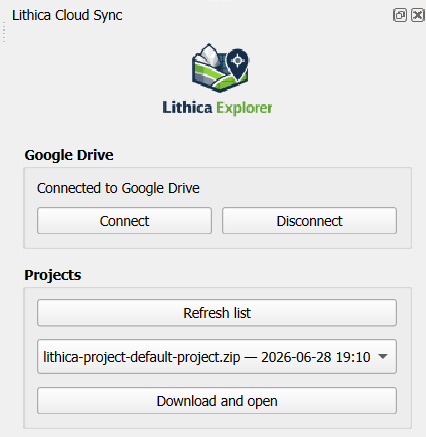
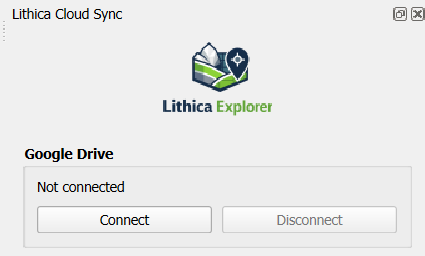
- Optional synchronization: Back up and restore project information through Google Drive when the user enables this feature
Core field work remains local-first. Online services and Google Drive synchronization are used only when the user selects or enables them.
Technical Stack
- Framework: Flutter with Dart
- Platform: Android (iOS planned after Android MVP stabilization)
- Data model: Offline-first local persistence with optional project synchronization
- Mapping: Raster/vector layers with offline package support
- Localization: Bilingual interface (English/Spanish) with persistent language settings
Primary Users
- Field geologists conducting mapping campaigns
- Exploration geologists requiring structured observation capture
- Mapping teams coordinating field data collection
- Students and junior staff learning standardized field classification methods
- Researchers needing reproducible field evidence documentation
Scientific Guardrails
The app implements clear scientific disclaimers:
- Field classifications are marked as preliminary and do not replace laboratory analysis
- QAPF estimates from hand samples are approximate and do not replace modal petrography
- Volcanic rock names may require geochemistry when mineral modes are not visible in the field
- Carbonate classifications may require thin section analysis for allochems, matrix, and diagenesis
- Metamorphic facies are not forced unless mineral assemblage and geological context support the interpretation
Applied Value
At its current stage, Lithica Explorer already operates as a practical geological field toolkit. Its main value lies in consolidating spatial data access, structured capture, and preliminary interpretation under offline conditions while continuing to expand its field and synchronization capabilities.